

Start with the source and the affected area
Record where the water first appeared, which rooms it reached, and whether the event is still developing. A plumbing fault, roof leak, drain backup, and external flood are different starting points. The team assessing the building needs that history alongside photographs and access to affected spaces. Keep the original incident record even if later findings change the suspected cause.
- Identify the person coordinating the incident.
- Separate observations from assumptions about the cause.
- Record which production, storage, and washing areas are affected.
Divide the work into clear stages
A repair proposal is easier to assess when it distinguishes source correction, assessment, drying, removal of damaged materials, reinstatement, and checks of equipment or utilities. Ask which stages need specialist involvement and who records their completion. A finished surface is not the same thing as evidence that concealed materials or equipment are ready to return to use.
Inside the kitchen
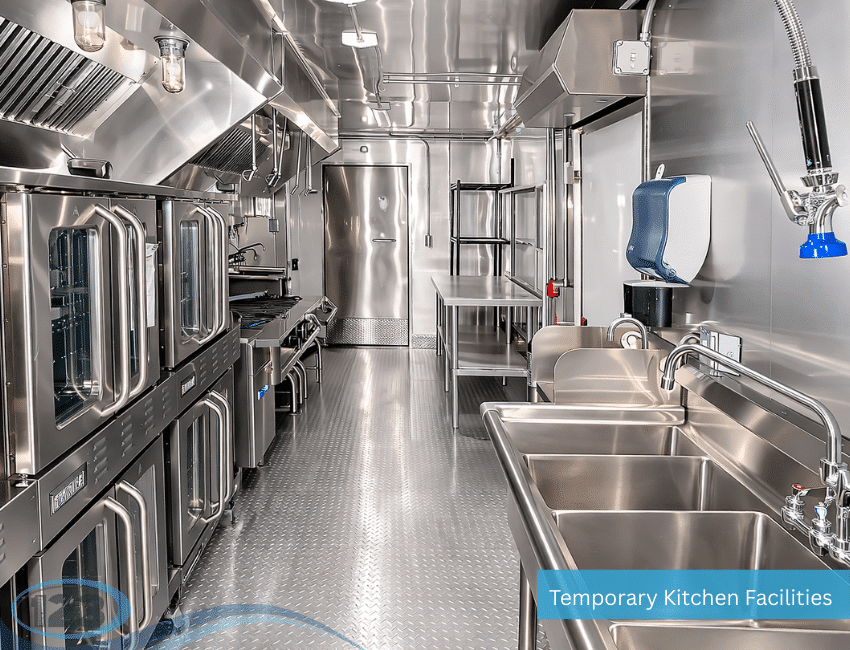
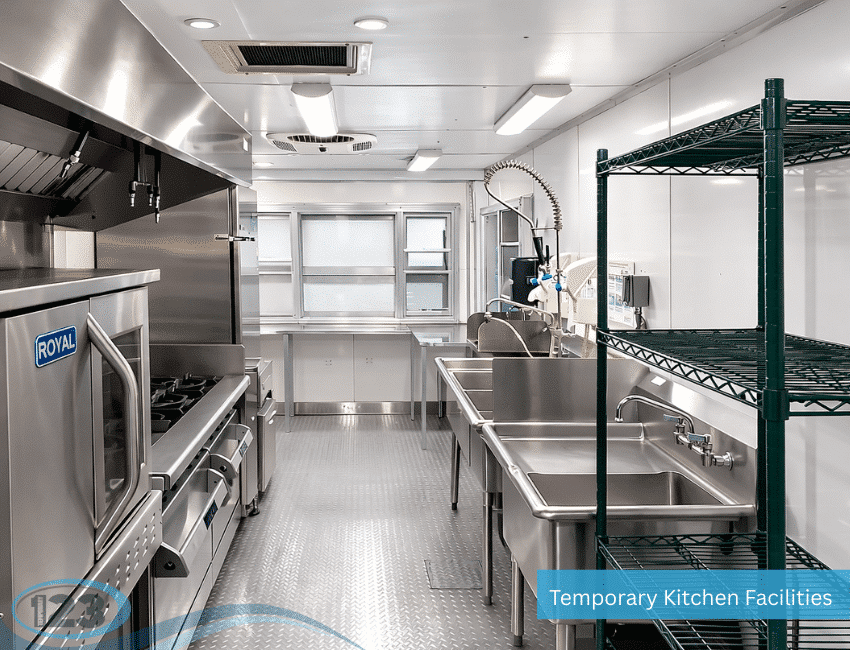
Kitchen layouts & equipment
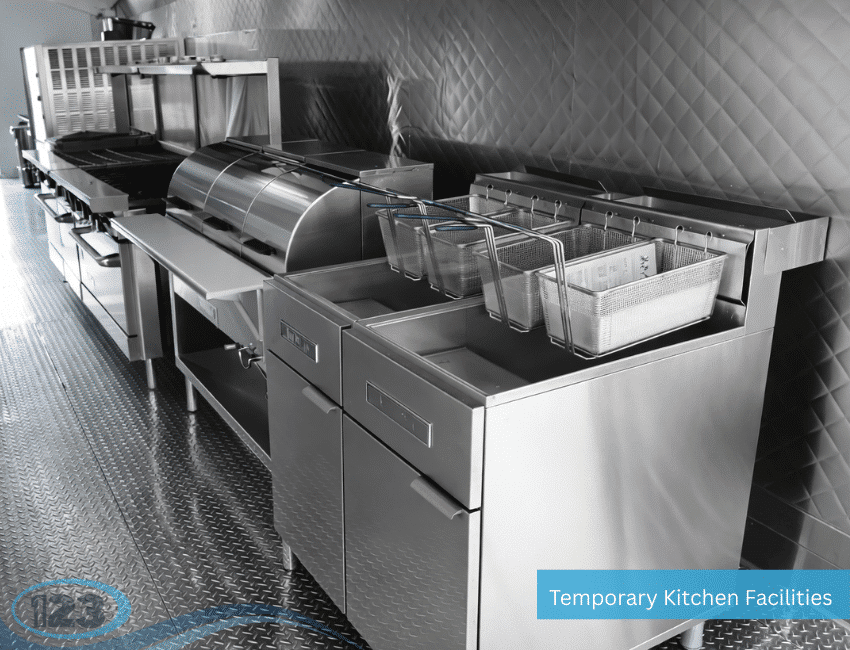
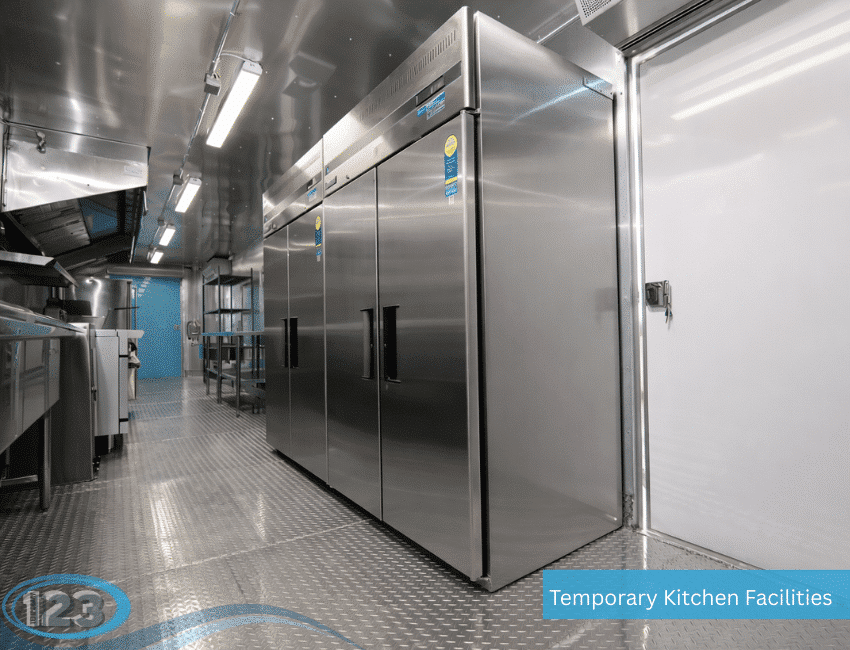
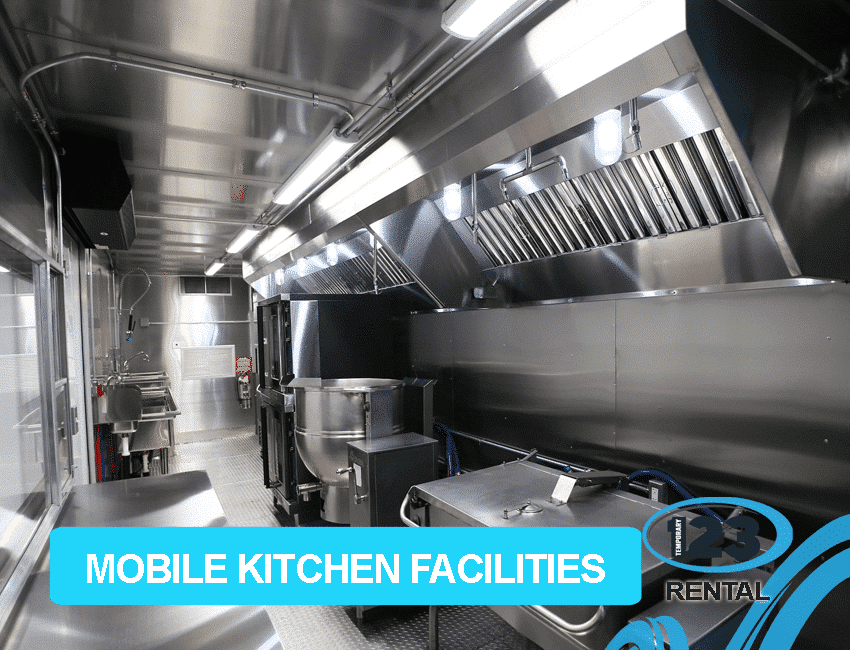
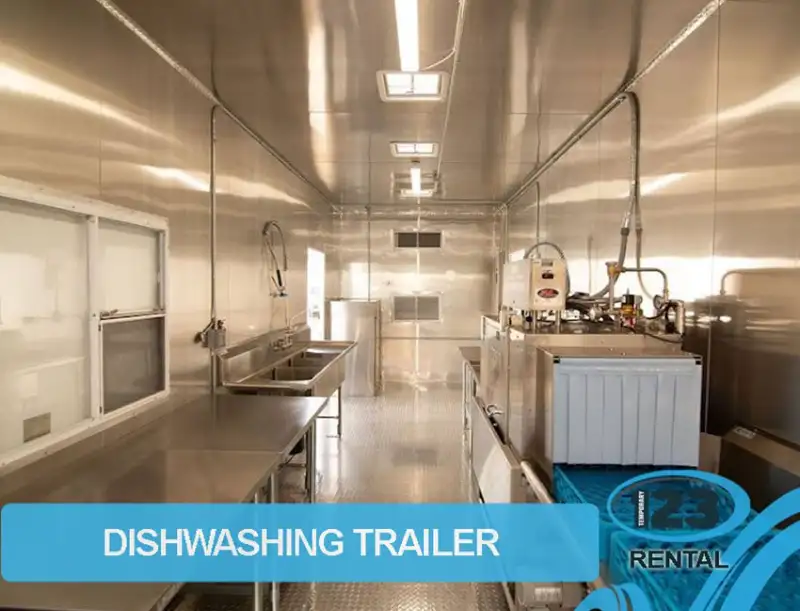
Reference photographs for preparation, cooking, storage, and facility planning. Select a photo to view it in full.

Connect repair completion with operating decisions
Agree how the building team will hand the kitchen back to the food-service operator. Keep inspection records, equipment service reports, and any applicable authority correspondence with the project file. Menu changes, an alternative kitchen, or a temporary closure may need a separate operating plan. Follow the requirements that apply to your facility rather than assuming that one national checklist provides permission to reopen.
Temporary kitchen rental planning
If repairs interrupt meal production, compare temporary kitchen rentals with usable on-site space and outside food service. Ask a provider how the proposed equipment, connections, and access fit your operation. Confirm availability and the quoted scope for the actual facility.
Reference resources