

Create an incident timeline
Keep the discovery date, known events, staff reports, and actions taken in sequence. Attribute observations to their source where useful. Record changes in the suspected cause as new information emerges rather than silently replacing the earlier account.
Group the evidence by work area
Use consistent room names for photographs, equipment lists, assessment findings, and quotations. Store original files as well as any annotated versions. A simple index of what the file contains can be more useful to another reader than a large folder with unexplained names.
- Incident history and safe-location photographs.
- Equipment and room identification.
- Assessment findings, scopes, and variations.
- Service reports and completion records.
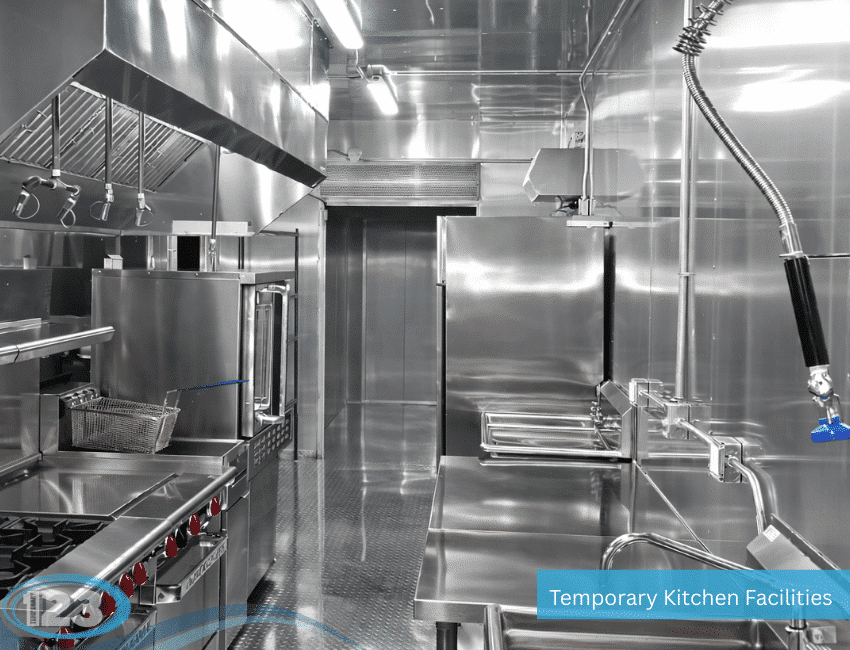
Inside the kitchen
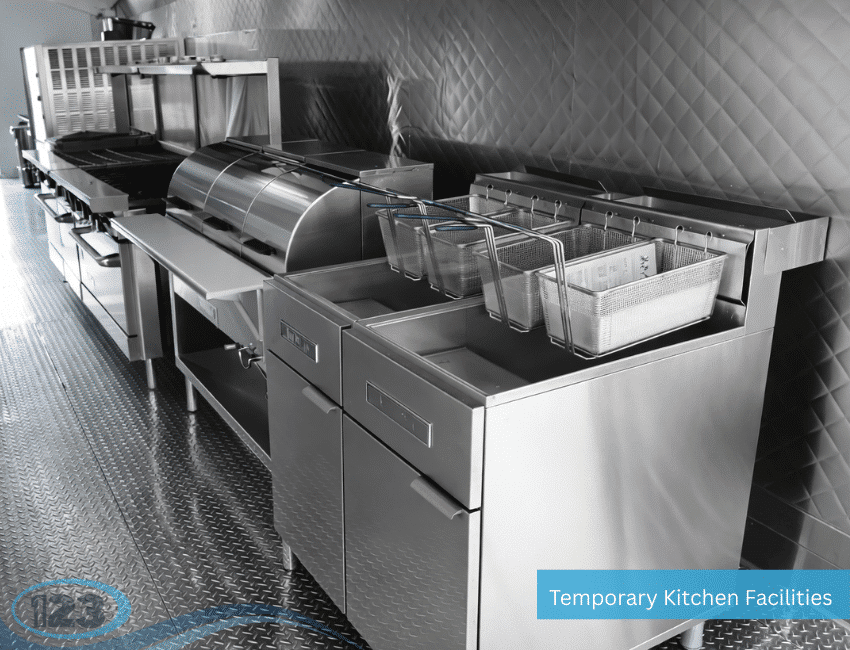
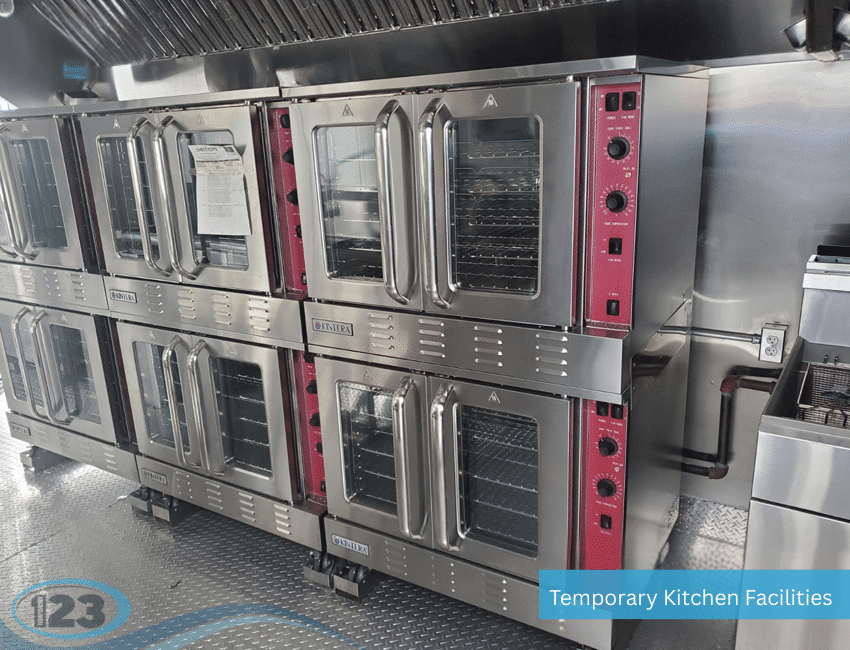
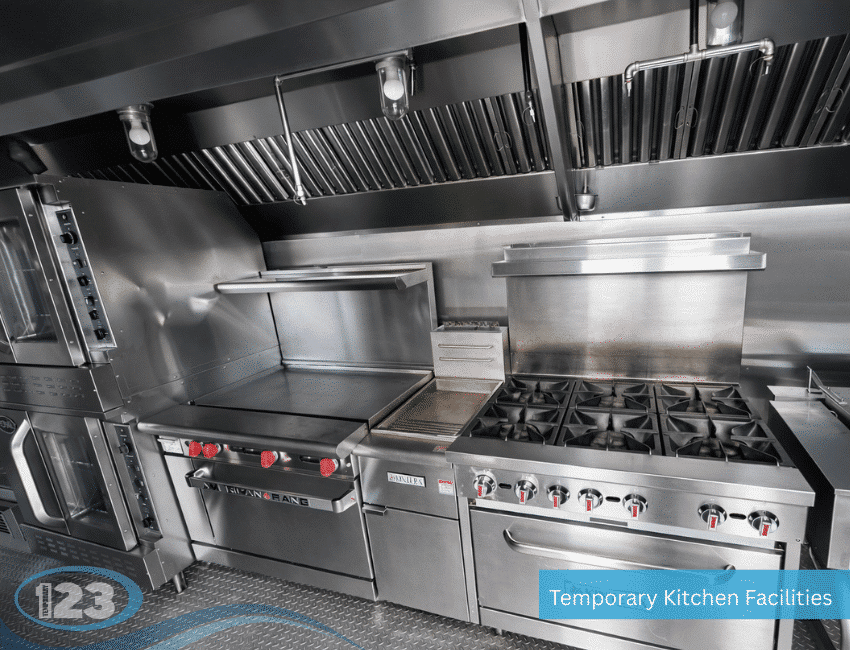
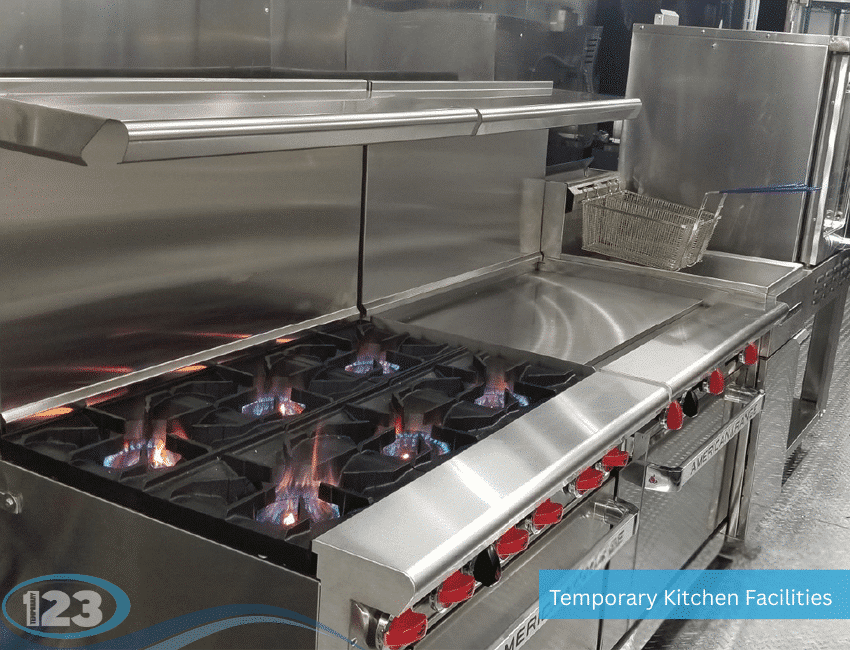
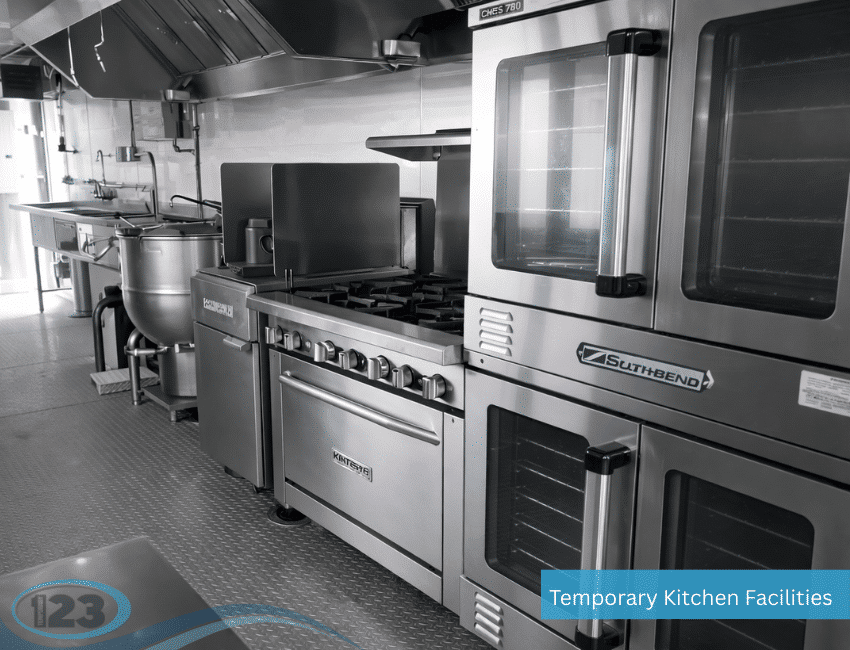
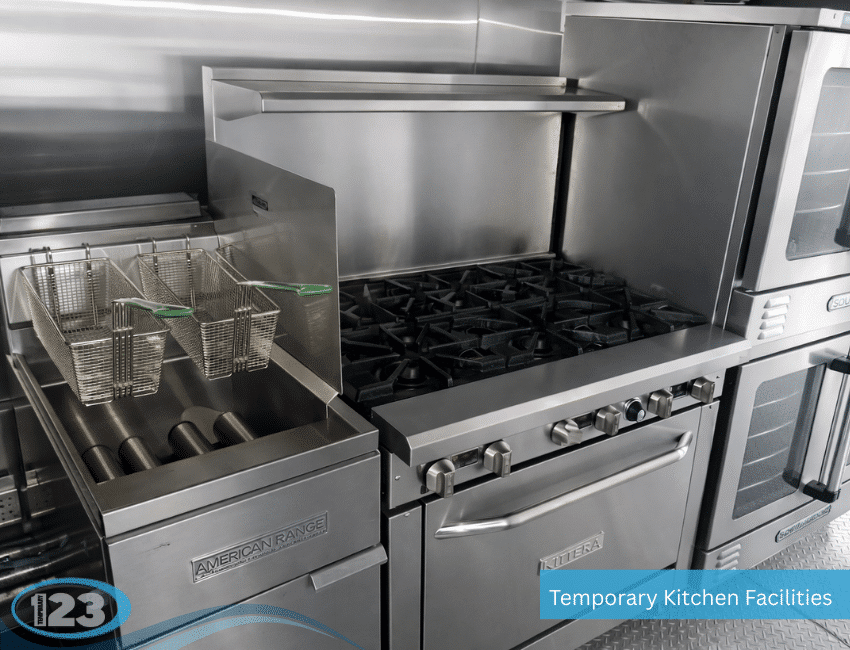
Kitchen layouts & equipment
Reference photographs for preparation, cooking, storage, and facility planning. Select a photo to view it in full.
Record decisions as well as outcomes
Note who approved a change, why it was requested, and which documents describe the new scope. Keep authority correspondence and operating decisions in the relevant part of the file. At handover, identify where the operator can find the records needed for maintenance or future review.
Temporary kitchen rental planning
If repairs interrupt meal production, compare temporary kitchen rentals with usable on-site space and outside food service. Ask a provider how the proposed equipment, connections, and access fit your operation. Confirm availability and the quoted scope for the actual facility.
Reference resources